HUMAN TRAFFICKING
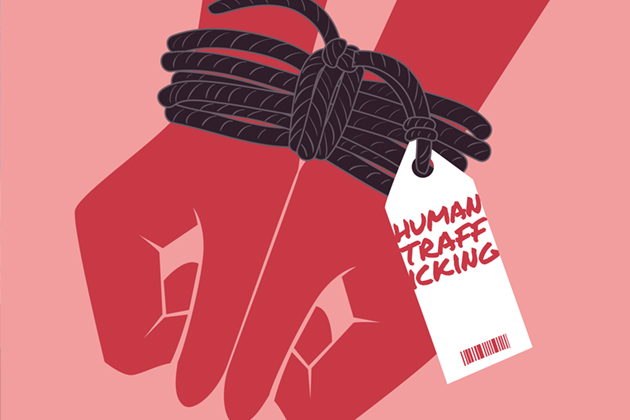
WHAT IS HUMAN TRAFFICKING
The United Nations Protocol to Prevent, Suppress and Punish Trafficking in Persons (article 3, paragraph a) defines trafficking in persons, also known as human trafficking, as the “recruitment, transportation,transfer, harbouring or receipt of persons, by means of the threat or use of force or other forms of coercion, of abduction, of fraud, of deception, of the abuse of power or of a position of vulnerability or of the giving or receiving of payments or benefits to achieve the consent of a person having control over another person, for the purpose of exploitation. Exploitation shall include, at a minimum, the exploitation of the prostitution of others or other forms of sexual exploitation, forced labour or services, slavery or practices similar to slavery, servitude or the removal of organs.”
On the basis of the definition given in the Trafficking in Persons Protocol, it is clear that trafficking in persons has three elements:
The Action (What is done)
Recruitment, transportation, transfer, harboring, or receipt of persons.
The Means (How it is done)
The threat or use of force, coercion, abduction, fraud, deception, abuse of power or vulnerability, or giving payments or benefits to a person who is in control of the victim.
The Purpose (Why it is done)
For the purpose of exploitation, which includes exploiting the prostitution of others, sexual exploitation, forced labor, slavery or similar practices, and the removal of organs.
To decide whether a particular situation constitutes human trafficking, consider the definition of trafficking in the Trafficking in Persons Protocol. Also consider the elements of human trafficking as defined by the relevant country’s laws, which can be found in the Legislation Database on Free Generation International’s website.